
A troubled teenager once asked the Lubavitcher Rebbe a heartfelt question.
“If G-d knew we would struggle and make mistakes,” he asked, “why didn’t He simply create us like angels?”
The Rebbe answered with a question of his own.
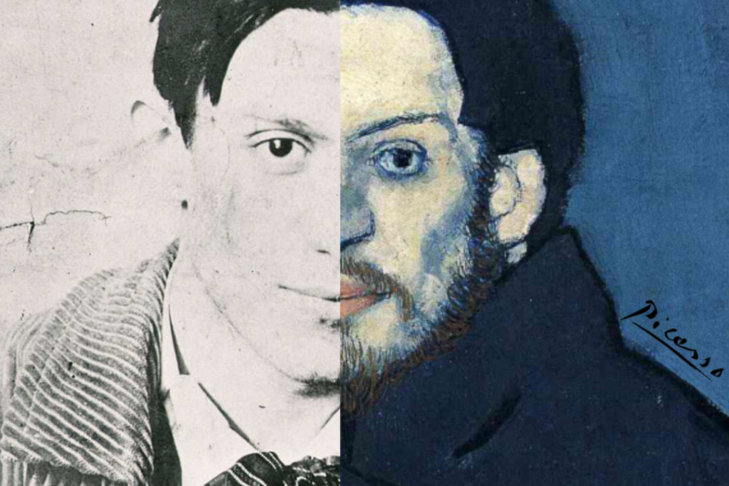
“What is worth more—a photograph or a portrait?”
A photograph captures every detail with perfect accuracy. It is an exact copy of what stands before the camera. A portrait is different. The artist interprets, emphasizes, and reveals something deeper than the eye alone can see. It is precisely that uniqueness which gives a portrait its value.
“The angels,” the Rebbe explained, “are G-d’s photographs. Human beings are His portraits.”
That insight helps explain one of the Torah’s most surprising passages.
Each year, just before Rosh Hashanah—the day when every person stands before G-d in judgment—the Torah assigns the opening of the Torah portion known as Netzavim.
Moses begins with these stirring words:
“You are standing today, all of you, before the L-rd your G-d…” (Deuteronomy 29:9).
If his purpose is to unite the people before they stand before their Creator, we might expect him to stop there.
Instead, he immediately begins listing everything that makes them different:
“Your leaders, your tribes, your elders, your officers, every man of Israel, your children, your wives, and the stranger in your camp—from your woodchopper to your water carrier” (Deuteronomy 29:9–10).
Why?
Why proclaim that everyone stands together, only to remind them how different they are?
Because the Torah’s idea of unity is unlike our own.
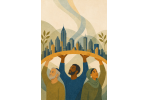
We often imagine unity means becoming more alike—thinking alike, acting alike, agreeing about everything. The Torah teaches something richer. Real unity does not erase our differences. It gives them a shared purpose.
An early Kabbalistic teaching observes that the Hebrew word tzibbur—community—can be read as an acronym for three kinds of people: tzaddik, the righteous; beinoni, the one still struggling and growing; and rasha, the one who has lost his way. A true community contains them all.
Chassidic thought carries the idea even further. These are not merely three different kinds of people. They are three dimensions found within every one of us.
Each of us has moments when we rise above ourselves, moments when we struggle, and moments when we fall short. None of us is a flawless photograph. Every one of us is a portrait still being painted.
That changes the way we see other people.
Instead of asking, “Why can’t everyone be more like me?” we begin asking, “What is it that G-d wishes me to learn from this person?”
The people who challenge us may possess strengths we lack. The people we admire carry burdens we cannot see. The people who seem weakest today may become tomorrow’s greatest teachers. Community is not built by gathering perfect people. It is built by recognizing that each of us has something to receive from the other.
Before we stand before our Creator, the Torah reminds us that He is not looking for identical photographs.
He is looking at a room full of unfinished portraits.
And every one of them is priceless.
I wish you a good week and Shabbat Shalom,
Rabbi Yonatan Hambourger
This post has been contributed by a third party. The opinions, facts and any media content are presented solely by the author, and Atlanta Jewish Connector assumes no responsibility for them. Want to add your voice to the conversation? Publish your own post here.