
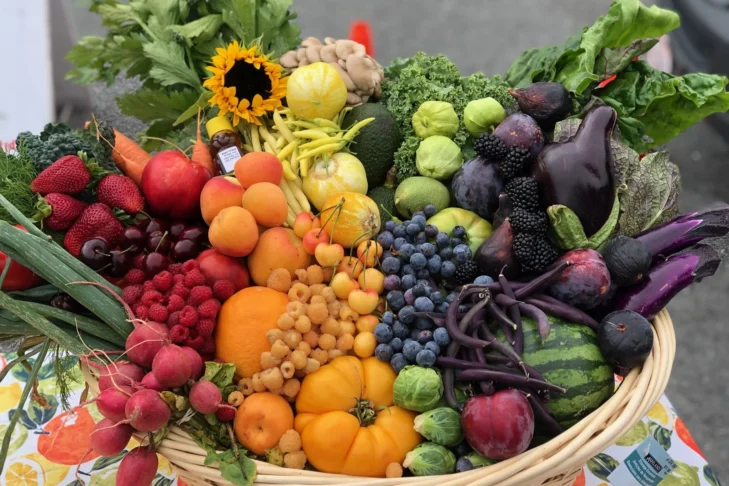
Imagine a Jewish farmer climbing the hills toward Jerusalem with a basket of the first ripe fruit from his fields. The harvest has been plentiful. His family is secure. After months of labor, this is a day of unqualified joy. He has every reason simply to give thanks and celebrate.
Instead, the Torah tells him to stop.
Before presenting a single fig or pomegranate, he must declare:
“The Egyptians treated us cruelly, afflicted us, and imposed hard labor upon us. So we cried out to the L-rd, the G-d of our fathers, and the L-rd heard our voice and saw our affliction, our toil, and our oppression” (Deuteronomy 26:6–7).
It is a startling interruption.
What do slavery, suffering, and desperate prayer have to do with a basket of beautiful fruit?
The Torah knows something about human nature.
The greatest danger to blessing is not hardship.
It is success without memory.
By the time this farmer brings his offering, generations have passed since the Exodus. He has never known slavery. Yet he does not say, “The Egyptians treated them cruelly.”
He says, “us.”
The Torah refuses to let prosperity become disconnected from the story that made it possible. Before the farmer may rejoice in what he possesses, he must remember where those blessings began—not with fertile fields, but with a people who cried out in pain and a G-d who heard their cry.
The Lubavitcher Rebbe taught that genuine gratitude is far more than saying “thank You.” It begins by recognizing the Divine Source from which every blessing flows. That is why the farmer tells a story before he presents his fruit. He is not thanking G-d only for this year’s harvest. He is acknowledging that today’s blessing is another chapter in a relationship G-d has sustained for generations.
That is why the Torah insists on the word “us.”
Faith is more than remembering history. It is recognizing that we are living inside it. The Exodus is not merely something that happened to our ancestors; it is the story that continues to shape our lives today. The farmer’s basket contains this year’s fruit, but his declaration reaches back to the redemption that made this moment possible.
Success quietly edits our memory until we imagine we arrived here by ourselves. We forget the parents who sacrificed for us, the teachers who encouraged us, the friends who stood beside us, and the countless acts of Divine providence that opened doors we never could have opened on our own.
The Torah interrupts our celebration before that illusion takes root. It teaches that joy becomes deeper—not smaller—when it remembers. Every blessing becomes richer when we can trace it back through the people, the sacrifices, and ultimately the G-d who made it possible.
The farmer’s basket was filled with fruit.
His heart was filled with history.
That is what transformed a harvest into an act of worship.
I wish you a good week and Shabbat Shalom,
Rabbi Yonatan Hambourger
This post has been contributed by a third party. The opinions, facts and any media content are presented solely by the author, and Atlanta Jewish Connector assumes no responsibility for them. Want to add your voice to the conversation? Publish your own post here.